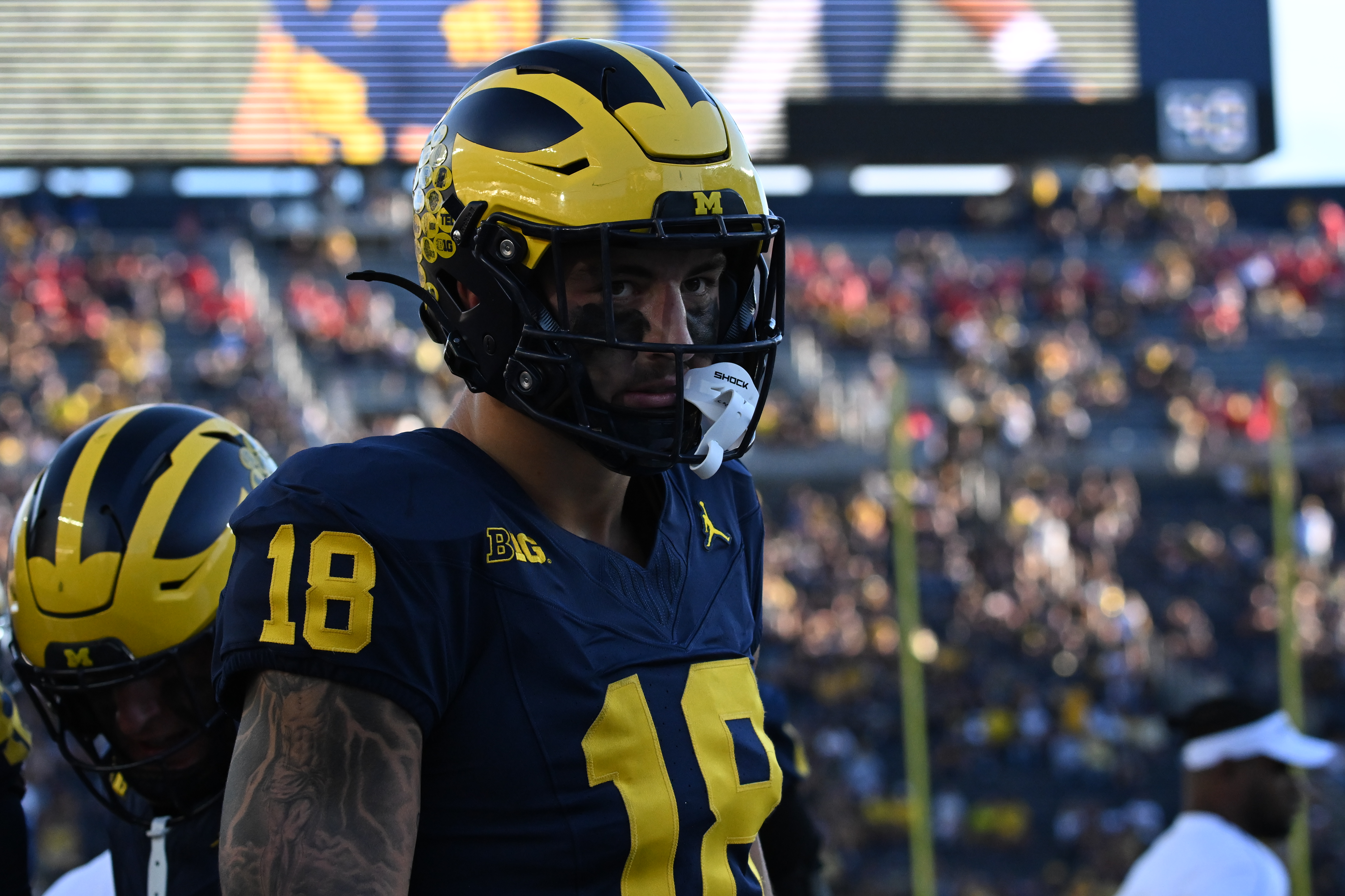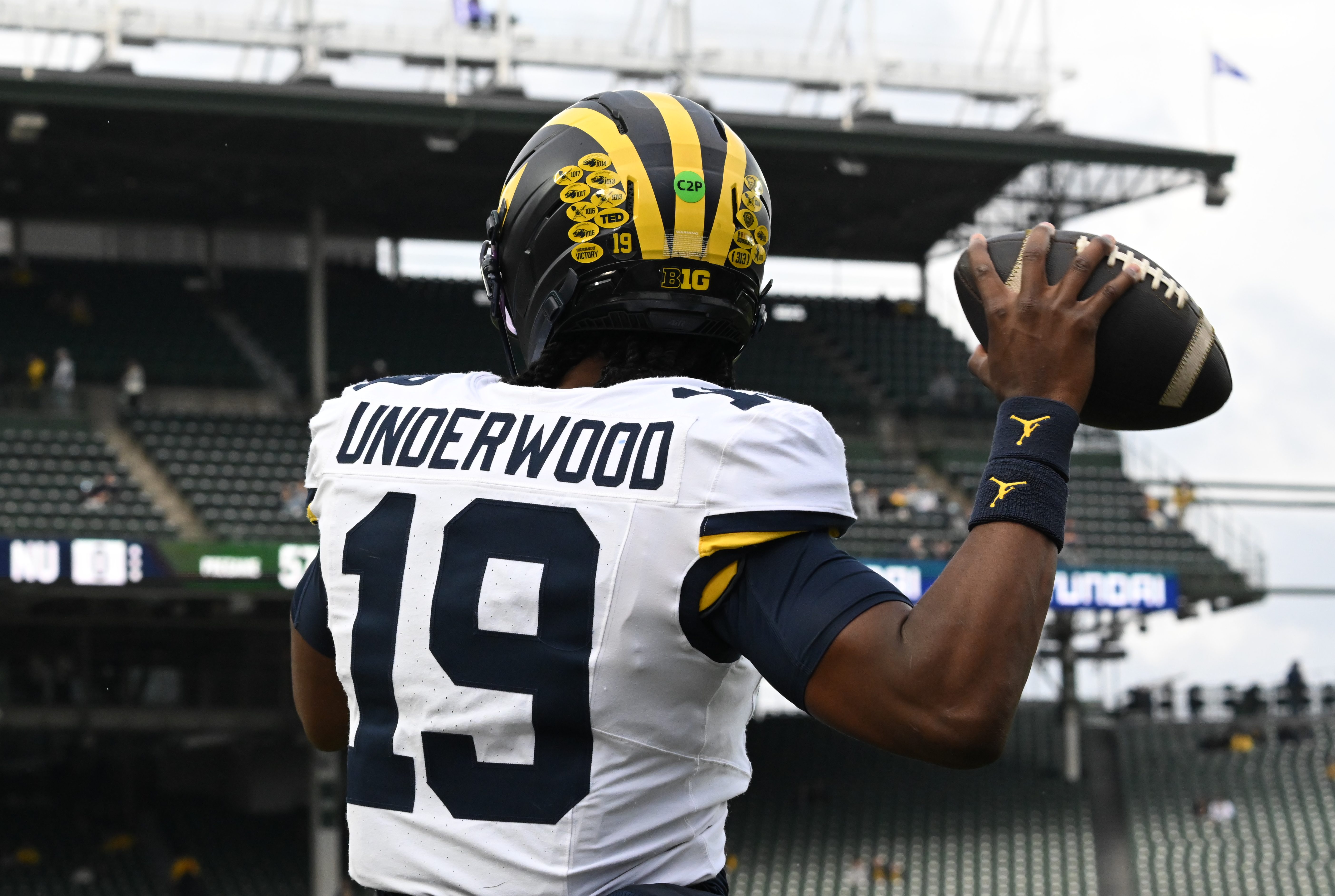
Once again, Michigan quarterback Bryce Underwood enters the season facing enormous expectations. A year ago, the pressure surrounding his freshman campaign stemmed largely from his status as the nation’s No. 1 quarterback prospect and the belief that he was ready to take over immediately. He did exactly that, becoming Michigan’s starting quarterback as a true freshman.
Underwood only added to those expectations during his preseason media availability when he confidently stated that fans had never seen a freshman quarterback like him before. However, the reality of his first season was far more complicated. While he helped lead Michigan to a 9-4 record, Underwood’s statistical production was far from spectacular, completing just over 60 percent of his passes for nearly 2,500 yards with 11 touchdowns and nine interceptions.
The raw talent was undeniable, but the development was almost nonexistent. The most concerning areas, including decision-making, ball placement, and footwork, remained persistent issues throughout the season. For a player viewed as a generational prospect, the lack of noticeable progression became one of the biggest frustrations surrounding his freshman campaign.
The criticism was not about expecting perfection from a true freshman quarterback. The concern was that Underwood appeared to finish the season with many of the same mechanical and mental hurdles he entered it with. The flashes of elite ability were obvious, but the consistency and growth expected from a player with his pedigree were lacking.
Those concerns only intensified when former Michigan head coach Sherrone Moore revealed that Underwood did not have a dedicated quarterback coach during his first season. The admission raised eyebrows among a fanbase that had already been wrestling with questions about Michigan’s ability to develop and utilize elite quarterback talent.
The revelation was especially damaging because Underwood himself had previously expressed concerns about Michigan’s lack of quarterback development during his recruitment.
While he spent much of his recruitment committed to LSU, the Belleville (MI) native ultimately chose to stay home and sign with the Wolverines in December 2024. However, Michigan’s lack of a consistent track record developing elite quarterbacks into NFL-caliber players was one of the factors that initially made LSU a more appealing option for the five-star prospect.
When Underwood’s freshman season did not show the expected level of growth, and the program acknowledged it had not provided the ideal developmental structure, those concerns appeared more justified.
Now entering his sophomore season with an entire year of starting experience behind him, Underwood’s next step is critical. The expectation is more than simple improvement. Underwood needs to show significant growth, both for his own trajectory and for Michigan’s future.
College football’s recruiting landscape has changed dramatically. Elite quarterbacks are no longer choosing programs solely because of tradition, championships, or history. With NIL playing an increasingly important role, the path to landing the nation’s top quarterback prospects is more competitive than ever. Development, resources, and a proven ability to prepare players for the next level have become major selling points.
Michigan has proven it can compete in the NIL era, but the program still has something to prove when it comes to developing elite quarterback talent into future NFL prospects.
That is why first-year head coach Kyle Whittingham prioritized bringing in quarterback coach Koy Detmer, who has worked with quarterbacks since 2022 with stops at Syracuse, New Mexico, Utah, and now Michigan. Underwood has also taken ownership of his own development, spending time this summer working with respected quarterback coach and former NFL quarterback Jordan Palmer.

The message is clear: a lack of resources, coaching, or support can no longer be used as an excuse. Underwood now has access to the infrastructure and guidance necessary to take the next step in his development. The question is whether Michigan can maximize one of the most talented quarterbacks the program has ever recruited.
For Underwood, the 2026 season represents a critical opportunity to prove that the talent, work ethic, and potential that made him the nation’s top quarterback prospect are translating into on-field results. But the stakes extend far beyond one player.
Michigan’s ability to attract future elite quarterback talent may ultimately depend on what happens next. Underwood’s own concerns during his recruitment about the program’s history of quarterback development will carry far more weight if he fails to make the expected leap.
For a program attempting to compete for the nation’s top quarterback prospects in the NIL era, developing Bryce Underwood into the player many believed he could become is not just important — it is essential.